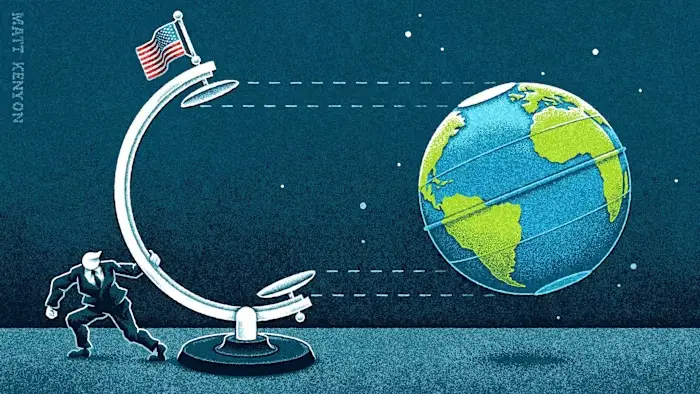
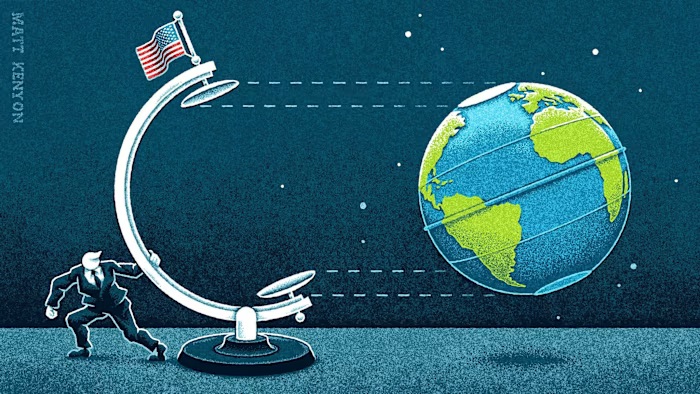
The world is considered to be nearing an “end of world order” for many reasons, including political, economic, environmental, and even cultural. With that in mind, let’s break this down from different perspectives.
- Political Perspective:
The End of Global Control Systems
For most of the 20th century, the majority of the world practiced the prevailing structures of the Second World War: a U.S. dominated Liberal International order practicing Democracy and market liberalism, enforcing global cooperation through the United Nations, the World Bank and also the NATO structures. This order was regarded as a “stabilizing global political order.” However, in the last couple of years, this political order is being considered to be in an ‘end of order’ state. There are many reasons that have led to the new order:
The Rise of China:
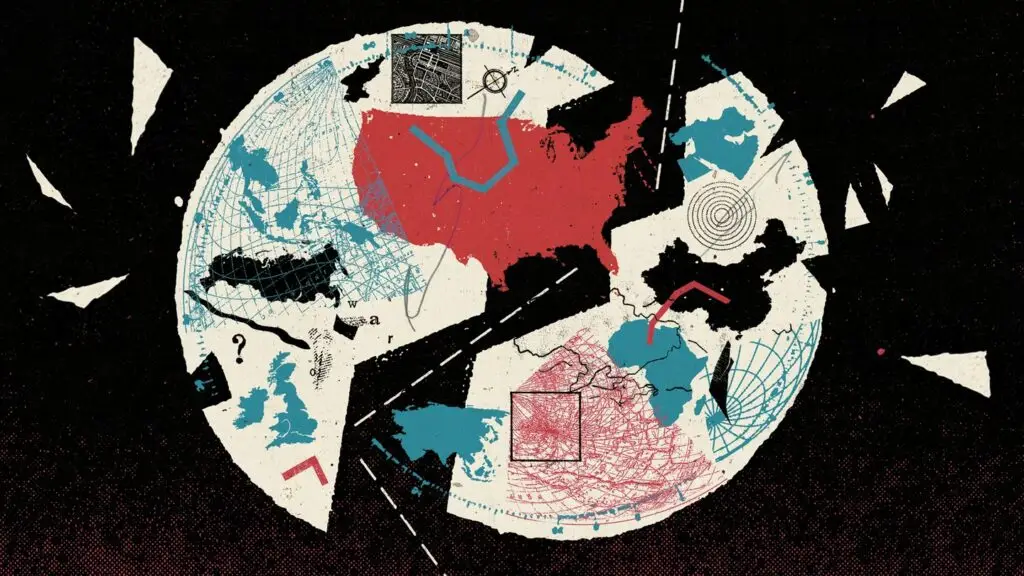
As China newly emerging world military and economic dominated nations, China in particular, are producing structural changes to the western dominated order. This will, in the years to come, facilitate a change in the world political order towards the Multipolar World, which will have the absence of a single political concept like a unipolar, or bipolar, or a single structural monopoly in a political order like in the current dominated structures.
Loss of Trust in Global Systems:
Irrespective of whether the systems are the United Nations, The European Union or any of the international cooperation and political order systems, the classical political world systems validation and structures are all in a crisis and the systems have lost their trust in political systems. This trust is lost due to the inability of these structures to resolve the international world problem of climate change, global inequality, world scale pandemic, and many of the other structural political order world problems.
Nationalism and Protectionism:
The rise of nationalism and protectionist policies in numerous countries (e.g. Brexit, ‘America First’ policies) is undermining global cooperation and integration. The return of populism and authoritarianism indicates a significant backlash against internationalist policies.
Consequently, we are perhaps witnessing the conclusion of the Western liberal world order and the beginning of a new, multipolar world order that is likely to be more fragmented and less predictable.
2. Economic Perspective:
The End of Global Capitalism?
The global capitalist system that emerged in the late twentieth century is once again under scrutiny. The recent globalization that encouraged the unrestricted flow of goods, capital, and labor, is believed to have pulled millions out of poverty, but it has also created increased inequality, the decline of manufacturing in developed countries, and environmental degradation.
Global Economic Crises:
The 2008 global financial crisis laid bare the weaknesses of the world’s integrated financial system, where interconnectivity seemed to invite economic meltdown. The Covid 19 pandemic further exposed the weaknesses present in global supply chains and the world’s reliance on international trade.
Economic Discontent and Inequality
Economic globalization creates profound inequality, both within and between nations, and creates widespread dissatisfaction concerning the organization of global economies. Global wages stagnate for the working class and job security erodes, even as the rich continue to get richer.
Alternative Economic Systems
Given the increasing popularity of cryptocurrencies and decentralized finance (DeFi), as well as renewed interest in alternative economic models, it seems we are on the verge of new ways of organizing the global economy and possibly the end of capitalism as we know it.
3. Technological and Social Perspective:
The End of Social Order?
The rise of AI, automation, and social media has both positive and negative impacts on modern society. Rapid technological change has altered how we live and interact while also leading to many challenges.
The rise of AI and automation in the workplace is a threat to millions of jobs, especially in the manufacturing, retail, and transportation sectors. If society fails to adapt, there may be mass unemployment, greater inequality, and social unrest.
Surveillance and Control:
The use of technology that help with the monitoring and regulation of the population raises legitimate concerns about to privacy. On the more extreme end of the spectrum, authoritarian regimes may use the technology to control citizens. The social credit systems, mass surveillance, and data collection done by AI could severely limit social order and individual freedom.
Social Media and Misinformation:
The misuse of social media has been another important issue alongside the decline of trust in traditional media, structures, and facts. Social media is good for mobilization, but is not good for fragmentation of society as it is involved in the breakdown of social order, traditional structures, and the increasing tensions.
The double-edged role of technology in creating new social order is in the favor of the people, or it may lead to chaos and social collapse.
Indeed, the end of world order will be the beginning of something completely new. The question is not whether the world will end but rather, what world will we create?
Global Point with Atiq Zahid